For many people, a motorhome is more than just a vehicle. It’s a lifestyle, an investment, and a passport to freedom. Whether it’s whisking you away on summer holidays or serving as a cosy winter hideaway, your motorhome deserves proper care — especially when it’s not being used.
Your motorhome deserves proper care — especially when it’s not being used.
That’s where storage comes in. Leaving your motorhome sitting idle on the street or tucked away in a corner can expose it to theft, weather damage, and long-term wear. But with the right storage strategy, you’ll not only protect your pride and joy but also ensure it’s ready to hit the road at a moment’s notice.
Here’s a detailed look at the most practical motorhome storage solutions in the UK, plus tips to keep your home-on-wheels safe, secure, and well-maintained when it’s off the road.
Option 1: Storing at Home
The easiest and cheapest storage option is keeping your motorhome at home. If you’ve got the space — a driveway, garden, or large garage — this can be incredibly convenient. You’ll have access 24/7, won’t need to worry about storage fees, and can keep an eye on it yourself.
But home storage isn’t without its challenges. Not every neighbourhood welcomes long-term motorhome parking, and some councils even have restrictions. You’ll also want to think about security. A large vehicle parked in full view can attract unwanted attention.
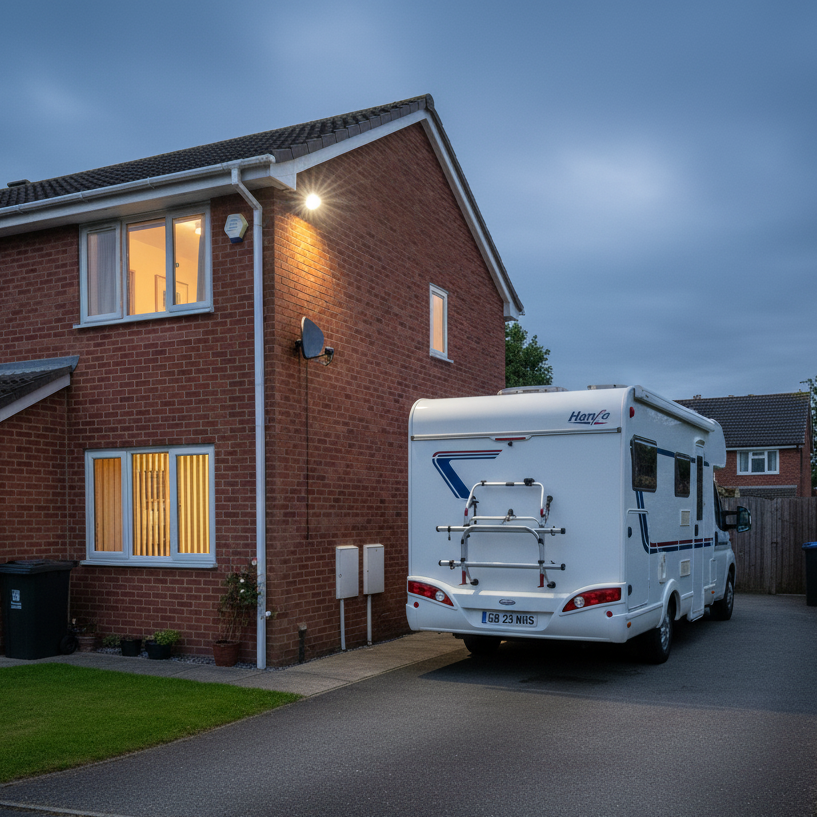
Best for: Owners who have the space, want easy access, and are prepared to invest in extra security measures.
That said, with the right precautions, home storage can be both practical and safe:
Covers and canopies protect against rain, frost, and UV damage — particularly important if your van is parked outside year-round.
Driveway or garden parking is usually the simplest. Make sure the ground is level and strong enough to support the weight.
Security upgrades such as CCTV, motion sensor lights, wheel locks, and steering locks act as strong deterrents.
Option 2: Secure Storage Facilities
For many motorhome owners, professional storage facilities offer peace of mind that home setups can’t match. These sites are specifically designed to store motorhomes, caravans, and campervans, often with top-tier security and insurance-approved standards.
In the UK, the gold standard is a CaSSOA-approved site (Caravan Storage Site Owners’ Association). Facilities with this accreditation meet strict security criteria, such as gated entry, CCTV coverage, perimeter fencing, and staff monitoring. Choosing a CaSSOA site can even lower your insurance premiums.
The benefits are clear:
- Strong security reduces the risk of theft or vandalism.
- Insurance compliance if your policy requires “off-road” or secure storage.
- Space-saving convenience — no need to sacrifice your driveway or garden.
The downsides? You’ll need to pay a monthly or annual fee, and access may be limited to certain hours. But for many, the peace of mind more than makes up for it.
Best for: Owners without secure space at home, or those looking to protect higher-value motorhomes.
Option 3: Indoor Storage
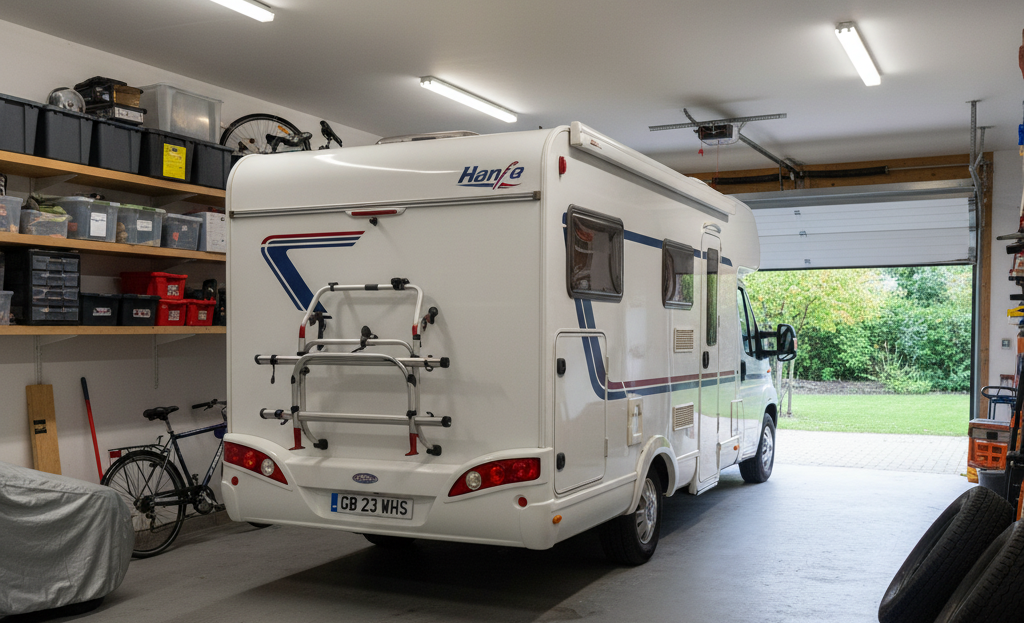
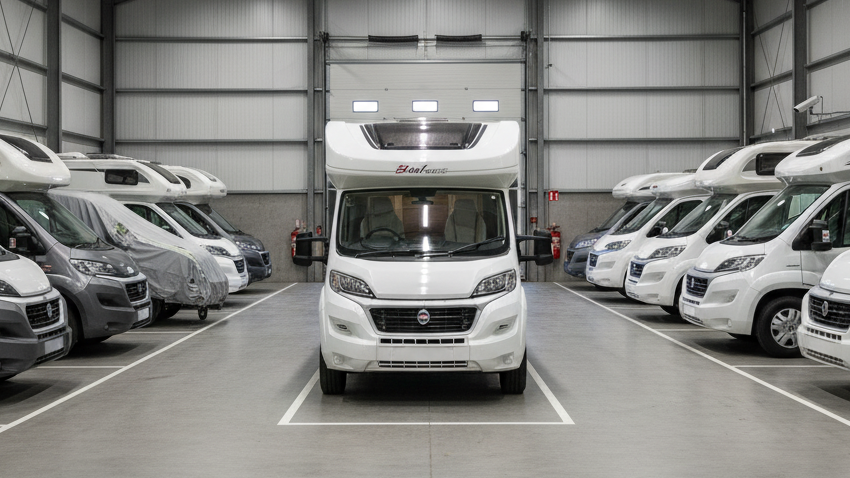
Indoor storage is the ultimate solution if you want your motorhome kept in pristine condition. Think of it as a private garage, but on a much larger scale. By parking indoors, your motorhome is protected from the elements, which dramatically reduces wear and tear.
Advantages of indoor storage include:
- Weather protection from rain, frost, hail, and harsh sunlight.
- Reduced damp risk since the vehicle isn’t sitting exposed to moisture.
- Longer lifespan for seals, paintwork, and interiors.
The biggest drawback is availability. Indoor spaces are limited and often cost more than outdoor compounds. Still, for long-term storage or high-value vehicles, the investment is well worth it.
Best for: Owners of luxury motorhomes or those who plan to leave the vehicle stored for extended periods.
Essential Storage Prep Tips
No matter where you store your motorhome, preparation is everything. Parking it up and simply locking the doors isn’t enough. A few simple steps can make all the difference between a smooth start next season and a string of costly repairs.
- Drain the water system – Empty fresh, grey, and black tanks to prevent freezing or unpleasant smells.
- Disconnect or trickle-charge batteries – Engine and leisure batteries both need care. A trickle charger keeps them topped up safely.
A few simple steps can make all the difference.
Tyre care – Inflate to the recommended pressure and move the van slightly every few weeks if possible to avoid flat spots.
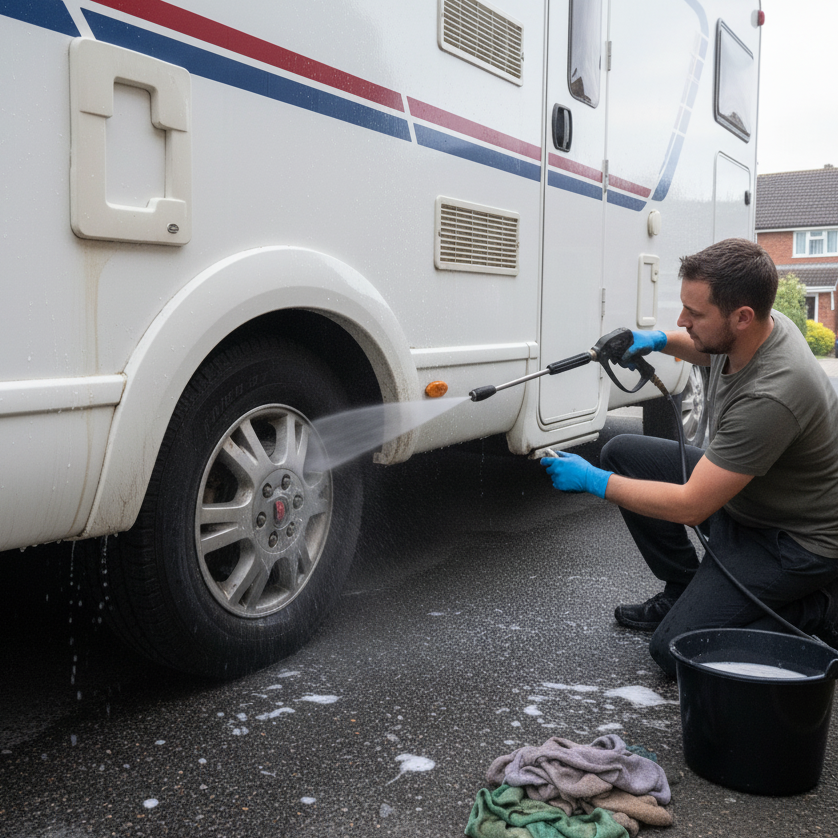
Thorough cleaning – Food crumbs attract pests, while dirt and grime can lead to mould or rust. A deep clean before storage keeps problems at bay.
Airflow matters – Leave vents slightly open or use moisture absorbers to prevent damp and condensation.
Pro tip: Treat your storage prep like a mini-service. The effort you put in now means less hassle later.
Protecting Against Weather
The UK climate isn’t exactly kind to motorhomes. Rain, frost, and summer sun can all cause damage over time. A breathable motorhome cover is one of the best investments you can make. Unlike tarps, which trap moisture, breathable covers let condensation escape while shielding against UV and rain.
It’s also worth waxing the exterior before storage. This adds an extra layer of protection to the paintwork, making it easier to clean next season. Don’t forget the little details either: lubricate door seals, hinges, and locks to keep them from sticking or cracking.
Remember: Weather protection isn’t just about keeping your motorhome looking shiny — it’s about preventing long-term structural issues like damp, rust, and perished seals.
Security Must-Haves
Unfortunately, motorhomes can be a target for thieves. Their value, size, and portability make them attractive. If you’re storing yours at home or even in a compound, adding extra security is always a smart move.
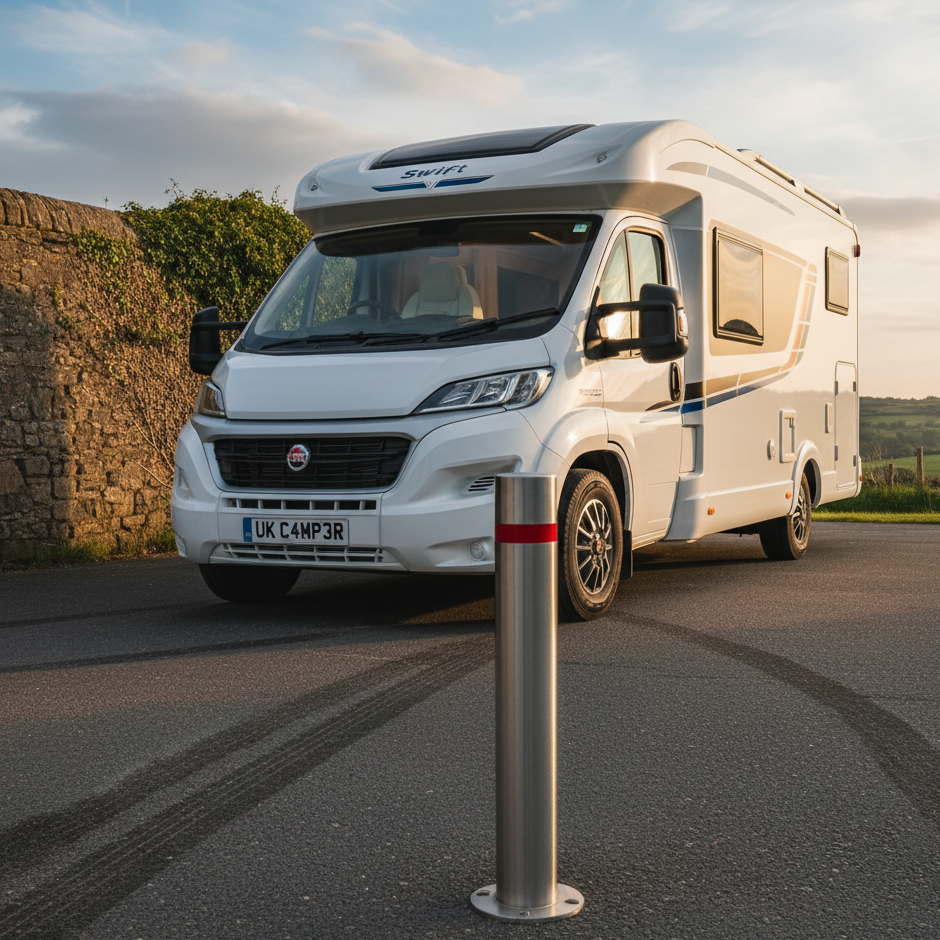
Consider layering your defences:
- Physical deterrents like wheel clamps, steering locks, and security posts.
- Electronic systems such as alarms, immobilisers, and GPS trackers.
- Visibility tools like motion-activated lighting or CCTV cameras.
The more barriers a thief has to overcome, the less appealing your motorhome becomes as a target. Many insurers also offer lower premiums if you can demonstrate robust security.
Think of security in layers: the harder you make it to steal, the less likely anyone will try.
Balancing Cost, Convenience & Security
So which storage option is right for you? Ultimately, it depends on your circumstances:
- At-home storage is free and convenient but requires good security.
- Outdoor compounds provide strong security at a reasonable cost.
- Indoor storage offers maximum protection but at a premium.
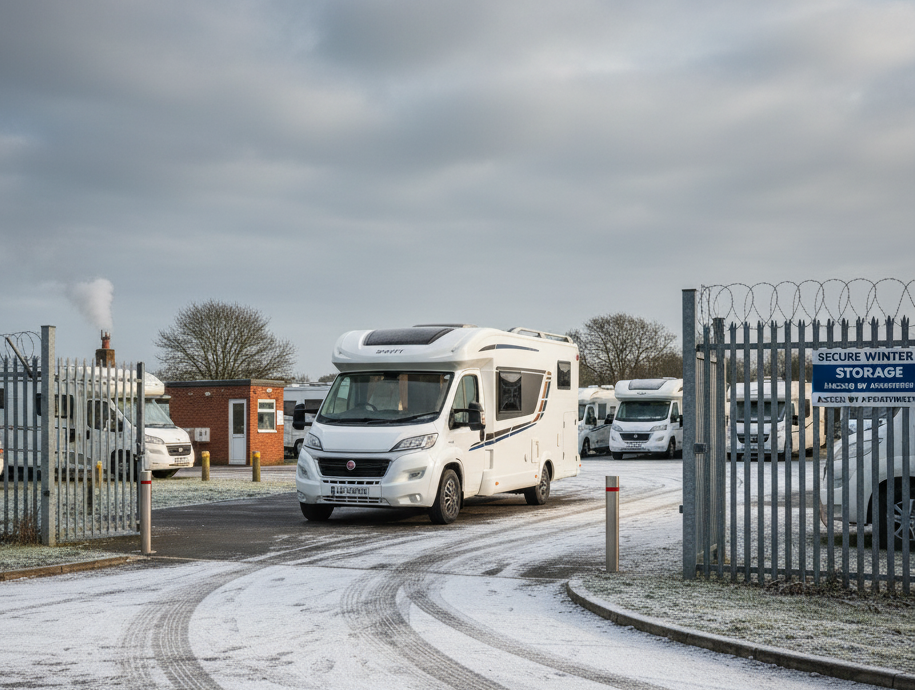
Most owners balance convenience with peace of mind. For example, some store at home during summer for easy access but switch to a secure compound over winter.
Storing your motorhome properly is about more than convenience — it’s about protecting your investment and ensuring it’s always road-ready. Whether you park it on your driveway, choose a secure facility, or invest in indoor storage, a few smart decisions now can save you money, stress, and repairs later.
Treat your motorhome well off the road, and it’ll reward you with years of safe, carefree adventures when you’re back on it.
Ready to sell or upgrade your motorhome?
At Sell My Motorhome Today, we make the process quick, fair, and hassle-free. Get your free, no-obligation valuation today and start your next adventure with confidence.